

Childrens Bunk Beds
Bunk beds let children share a room without having to sacrifice floor space. This lets them have more space for physical play and allows siblings to live together!
Be aware of your child's physical growth and age when choosing a bunkbed. Choose a bed that has guard rails on the top and an erect ladder or stairs.
Space-saving
Bunk beds are a great option to make the most of the floor space a room shared by children and allow more space for playing. They are also less expensive than two separate beds of the same size and are a great budget option for families with multiple children. Bunks with trundle beds, which accommodate a third mattress on casters under the bunk on the bottom, can be even more cost-effective for large families.
Kids love bunk beds, because they're fun and provide a unique place to make lasting memories with their siblings or friends. Sharing understanding with your siblings is an excellent way to build relationships between them, as it teaches cooperation and accountability.
Many bunk beds for kids provide additional benefits by having built-in storage solutions like drawers and shelves. They are ideal for storing clothing, books and toys. It's also a great way to introduce your kids to the concept of putting things away after use and will serve them well as they get older.
It's not a requirement that children should sleep on the top bunk. However it is recommended that they are at least six years old to be able to demonstrate the physical and mental development required to be able to safely use the upper bunk. Be aware that children with poor coordination may struggle to stay asleep in a bunk bed higher up. It's best to adhere to the Consumer Product Safety Commission recommendations to ensure your and your children's safety. Also, make sure to use a sturdy, durable ladder and safety rails for the highest bunk. Bunks with desks are a popular design that can provide an additional study space for children to do their homework, play games and more.
Flexible
Bunk beds are an excellent option for bedrooms with children since they can be adapted to meet the children's unique requirements. They're also great for shared rooms since they can maximize space and add an artistic design feature to the room. There are beds for every family, from twin-over-twin to full-over-queen bunk beds.
You can add additional safety rails that are high on your child's bunk bed to prevent them from falling out at night. Kids can climb down from the bottom bunk by using the standard ladder or a sturdy staircase that features handrails. Staircases are also more convenient for younger children than ladders, and are easy to install without the need for tools. You could even consider adding a pull-out trundle under the bunk bed your child is sleeping in to give them an extra mattress for sleepovers without taking up too much space.
If you have a room that has low ceilings and a small space, you might want to consider an low bunk bed for children that has the upper bunk placed at an angle to the lower bunk. These beds are ideal for rooms with small spaces, and they are also an ideal option for smaller children since the mattress is higher than the floor.
You can also pick an loft bunk bed that has the two beds separated by a staircase built into the bed. This type of bunk bed is more affordable than the traditional bunk, but it lets kids have a private space. Most loft beds have built-in shelves or drawers that can be used to store books, clothes and toys. They are also available with a variety of colors and finishes so you can blend them into the rest of your child's bedroom furniture.
Fun
Bunk beds can do more than just offer space for children; they can also help them grow socially and intellectually. They can add a fun, interactive element to a room that encourages children play with their imaginations and create new worlds. They can aid siblings in bonding and form lasting friendships through shared experiences like sleepovers and bedtime stories. They can even encourage children to stay in bed at night, by making it more thrilling to fall asleep rather than playing.
Bunk beds are a great way for children to express themselves and their style. They can pick the ideal style and then add fun features. They can also transform their loft into a workstation or study space with built-in shelves or drawers to store books clothing, toys, and other items.
There are many different types of bunk beds that kids can use that include twin over twin or full mattresses. Some models, like the Io BunkPod by Dot and Cross offer multiple functions, including two stand-alone units with a desk and storage space, and will grow with your child from toddler to teen years.
The addition of a slide tent curtains, or other fun features to the top bunk can make it seem like the castle or pirate ship, or mountaintop fortress. This kind of feature makes the bedroom more enjoyable for children to climb up to bed, and it aids in building confidence when climbing. It also allows kids to play imaginative games before bedtime. This will help improve their problem-solving skills as well as their creativity. It can also spice up their sleepovers and make it more enjoyable for friends to invite guests over to spend the night.
Safety
While bunk beds do come with certain dangers, they can also be secured with the right guidelines and measures. As children get older, they are more likely to disregard these rules, so parents must constantly remind them that they're there for their own security. This is particularly important when children are hosting a sleepover with friends as they may not be as well-versed in the rules.
Injuries that result from bunk beds can range from minor bumps and bruises to brain bleedings and concussions which are serious medical conditions that require immediate treatment. Serious injuries can be caused by the bunk bed collapsing, which can keep children in the bed or cause them to fall on hard surfaces. These injuries can be prevented by building bunk beds according to national safety standards and by making sure that children are aware of these dangers and how to avoid them.
Ensure that bunks have guardrails on both sides, and ensure that the gaps are not greater than 3.5 inches to avoid strangulation. It is also essential to keep the bunks free from hanging ceiling fans or lighting fixtures and to install an emergency lighting near the ladder for bathroom trips at night. It's also a good idea to have children use the ladder to climb into and out of their beds, rather than chairs or other furniture.
It's also a good idea to ensure that all bunk-related equipment like ladders anchoring kits, screws and bolts don't contain toxic substances like di-(2-ethylhexyl) the phthalate (DEHP) dibutyl phthalate (DBP), the benzyl butyl-phthalate (BBP) diisononyl-phthalate (DINP) diisobutyl phthalate (DIBP) or dicyclohexyl phthalate (DCHP). These chemicals can cause respiratory issues for children.
Aesthetics
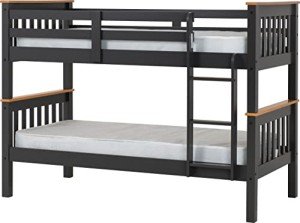
Bunk beds can be a striking design statement However, you can also keep them simple and timeless. They are also available in a wide assortment of colors, finishes and materials that can be matched to any style. A white bunk bed can work well with an ocean or cottage-style decor and an espresso stain will warm rustic or farmhouse bedrooms. The bunk beds can also be found with fun colors such as pink.
Some bunk beds are stacked and others are divided into two separate bed frames. This allows kids to switch between stacked and separate sleeping arrangements as they become adults and teens. The bed we tested from Pottery Barn Kids is a full over full bunk that can accommodate twin mattresses. It's Greenguard Gold certified. This means that it's made of materials that meet their standards for emissions that are low. It's a great option for children who prefer the stepladder instead of a staircase that could take up valuable space.
Many bunk beds for kids are constructed of solid wood, including plywood and spruce. This gives them a strong and robust feel that is suitable for children to sleep on. They also have natural grain patterns and colors that coordinate with any bedroom furniture. They could have a distressed finish, or they might be finished with a smooth coat that's ideal for kids who enjoy drawing and painting.
A futon-style bunk bed is another alternative. It features an ottoman at the bottom, and a bed at the top. They're typically referred to as twin over futon or queen over, and they're popular for smaller rooms that can't accommodate full-size beds.